


A Beginner's Guide to the Leg Press Machine
Your leg muscles are the unsung heroes of many everyday activities. From your first foot on the floor in the morning, to rolling into bed at night, those limbs are always working overtime. Give these muscles the love they deserve with this comprehensive beginner's guide to the leg press machine. Learn about different leg press machines, the types of equipment and exercise options available, and how to use proper form and technique for better results.
Join Planet Fitness today to access even more expert guidance, and start your journey to making leg days the best days.
What is a Leg Press Machine?
First up, what exactly is a leg press machine? A leg press machine is a piece of popular gym equipment that targets lower body muscles through controlled movements, toning and strengthening your legs while minimizing stress on the back and joints.
Different Types of Leg Press Machines
But not all leg press machines are created equal. In fact, there are several variations of leg press machines, each offering unique benefits
Horizontal Leg Press: This traditional type of leg press machine is perfect for beginners. The horizontal leg press features a seat that moves back and forth on a rail system while you push against a flat, stationary platform with your feet, causing the seat to slide backward. The flat position of this machine offers stability and ease of use, making it a great option if you’re just starting out with strength training. This machine allows for controlled movements, support for your lower back, and can be customized to suit various fitness levels and ranges of motion.
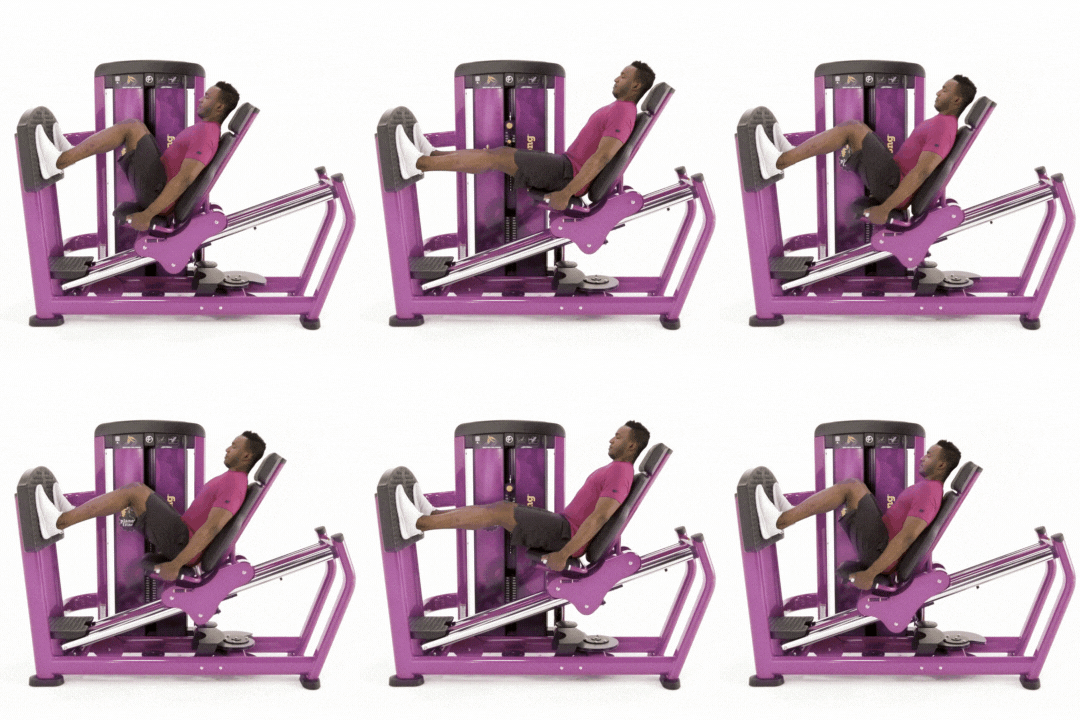
45-Degree Leg Press: Sometimes known as an angled or incline leg press, this leg press machine features a stationary seat positioned at a 45-degree angle. While sitting on an incline, you push against a flat platform with your feet as it slides up along a rail system. Still a great option for beginners, the 45-degree leg press allows for a greater range of motion than horizontal leg presses and incorporates more muscles including the glutes and hamstrings.

Vertical Leg Press: Unlike traditional machines, you lie on your back with your legs in the air to use the vertical leg press. This distinct movement pattern places a greater emphasis on engaging the muscles from a different angle, providing a challenging and effective workout. Vertical leg presses are suitable for advanced athletes seeking to add variety to their leg workouts and challenge themselves in new ways.
Variations of Leg Press Workouts
To target different muscle groups, there are a few stance variations to try when using a leg press machine:
Narrow Stance: Emphasizes the quads, providing a focused workout for the front of the thighs.
Wide Stance: Engages the inner thighs and glutes more intensely, promoting overall lower body strength and stability.
Single Leg: Enhances balance and coordination while isolating each leg for unilateral strength development.
Benefits of Leg Press Workouts
Besides targeting multiple muscle groups at the same time, leg press workouts offer a ton of other benefits, including:
Increased core strength
Better mood and increased dopamine levels
Improved mobility, flexibility, and range of motion
Support for overall functional fitness helping with everyday movements
Not to mention, a seated leg press machine can also enhance your balance and stability, particularly if you're a beginner at lifting heavy weights. Building core and leg stability at the same time creates the perfect conditions to prepare your body for more advanced exercises down the road.
Proper Form and Technique for the Leg Press Machine
Before you hop on that machine, it's important to understand and use proper leg press form and technique. We recommend these tips & tricks to get the most out of your leg press workout:
Set up the machine for proper use, adjusting the seat and backrest to your comfort level.
While inhaling, extend your legs, pushing the weight away from your body.
Exhale as you lower the weight back down, maintaining control and avoiding locking your knees.
Which Muscles Do Leg Press Machines Target?
Primarily, leg press machines target the quadriceps, hamstrings, and glutes, providing a comprehensive lower body workout. Quads are the key movers in leg press exercises. Meanwhile hamstrings assist in knee flexion (a.k.a. moving away from the body) and hip extension (a.k.a. moving toward the body), and glutes stabilize the pelvis if opting for wide stance variations.
Quads. When on a leg press machine, your main focus is usually on pushing the weight away with your legs. This action primarily engages your quadriceps, which are the large muscles on the front of your thighs. They're doing most of the heavy lifting, so to speak.
Hamstrings. Now, as you're pushing the weight, your hamstrings (the muscles at the back of your thighs) also play a part. They help stabilize your knees and assist in extending your hips to lift the weight.
Glutes. The glutes, although not always directly engaged-depending on the variation you choose-are crucial for maintaining hip stability and alignment, especially in wide-stance leg presses. This exercise helps maintain correct leg press form and stability.
Leg Press vs. Other Lower Body Exercises
While we’re giving a lot of love to the leg press machine, it isn’t the only way to rock leg day. Although leg press machines provide a controlled workout environment for specific muscle groups, they can also be combined with other lower-body exercises for a comprehensive workout routine. (Psst—check out variations on some of our classic faves below for free in the Tutorials section of the PF App!)
Squats: Beyond the lower body, squats also engage the core. They’re a great exercise to target multiple muscle groups at once while increasing your stability and mobility. Stand with your feet shoulder-width apart, lower your body by bending your knees and hips while keeping your chest up, then push through your heels to return to standing.

Lunges: Lunges can improve balance, coordination, and leg strength while working most of the muscles in your lower body. Step forward with one leg, lowering your hips until both knees are at about 90 degrees, then push back to the starting position and switch legs.

Deadlifts: Deadlifts are a compound movement that again engage multiple muscle groups—particularly the back, glutes, and hamstrings—all while being a key move to help improve posture. Stand with your feet hip-width apart with a dumbbell in each hand. Keeping your back straight, hinge at the hips to lower the dumbbells toward the ground, then lift by extending your hips and knees until fully standing.

Alright, you’re ready to go! With a solid understanding of how to use the leg press machine and tackle other lower body exercises, you're now fully equipped to revolutionize your leg day routine. And remember to focus on the correct leg press form and technique to boost your results and reduce the chance of burning out or getting hurt.
Whether you're a beginner or an experienced fitness enthusiast, using different leg press variations can strengthen and tone your legs, build strength, and incorporate functional fitness into your routine.
Ready to rock your leg day routine? Download the PF App now to start your fitness journey for free!
Related Topics
Related Articles
Education & TipsBeginner Tips
Anaerobic Exercise Workout for Beginners
Looking to start with something new? Starting a new workout routine, whether to stay on top of your health or to reach new fitness goals, is a fantastic endeavor—and anaerobic exercise is a great way to begin.
Anaerobic workouts involve short, intense bursts of exercise and offer many benefits. In this guide, we’ll explain what anaerobic exercise is and why it’s so rewarding. We’ll also provide a simple anaerobic workout plan designed for beginners just starting out, with tips to keep you safe and strong along the way.
Ready to dive in? Keep reading to learn how anaerobic exercise can take your fitness to the next level—then try our beginner-friendly workout plan. Or, jumpstart your routine today with the PF App for free!
What is Anaerobic Exercise?
Anaerobic exercise involves short, intense bursts of physical activity that push your body to work without oxygen.
The term “anaerobic” literally means “without oxygen,” which is the opposite of “aerobic” or “with oxygen.” Unlike aerobic exercises—such as running or swimming—that require steady, long-term oxygen consumption, anaerobic exercises like sprinting, weightlifting, and high-intensity interval training (HIIT) push your muscles to their limits in a short amount of time.
Examples of anaerobic exercises include:
Sprinting
Weightlifting
High-Intensity Interval Training (HIIT)
Here’s a simple breakdown of how anaerobic exercise works and why it’s so effective:
During anaerobic exercise, your body uses stored energy from your muscles rather than relying on oxygen as it does with longer, steady activities (like jogging). This is why anaerobic exercises are short but intense—they don’t need oxygen to fuel them.
That burning feeling in your muscles? It’s from lactic acid, which builds up when your body works hard without oxygen. While it can be uncomfortable, it’s actually a sign that your muscles are getting stronger. Plus, one of the most extraordinary things about anaerobic exercise is that you keep burning calories even after you’re done. This happens because your body needs to recover and clear out the lactic acid, which means extra calorie burn for hours after you finish.
Benefits of Anaerobic Exercise for Beginners
Why should beginners incorporate anaerobic exercises into their fitness routine?
Let’s break down the key benefits of anaerobic exercise:
Builds Strength and Muscle Mass
Anaerobic exercises, such as weightlifting and bodyweight training, force your muscles to work harder by using energy stored within the muscles. When you do anaerobic exercises, your muscles get tiny tears. Don’t worry—it’s a good thing! As your muscles repair themselves, they grow back stronger. The more muscle you have, the more calories you burn throughout the day, even when you're just sitting around.
Improves Endurance and Performance
By challenging your muscles and pushing your body to its limits, anaerobic exercises improve your overall endurance. Over time, this helps improve your performance in other types of physical activity, letting you go harder for extended periods.
Boosts Metabolism
Anaerobic workouts are particularly effective for boosting your metabolism. After an intense anaerobic workout, your body continues to burn calories even at rest—Excess Post-Exercise Oxygen Consumption (EPOC). This effect leads to more significant calorie burn throughout the day.
Supports Weight Loss
Because of the high-intensity nature of anaerobic exercises, they are excellent for fat burning. The short, intense bursts of energy can help you shed fat more efficiently than traditional steady-state cardio exercises.
Beginner’s Anaerobic Exercise Workout Plan
Ready to get started? Here’s a simple workout plan for beginners that focuses on building strength and endurance through anaerobic exercises. Make sure to follow each step to get the most out of your routine.
Warm-Up. Warming up is essential for preparing your muscles and reducing the risk of injury. Begin with 5 minutes of dynamic stretching—focus on movements like arm circles, leg swings, and gentle lunges to get your blood flowing.
Sprints
Run at maximum speed for 30 seconds, then rest for 90 seconds. Repeat 4 times.
Focus on maintaining good posture and driving your knees up during each sprint.
Bodyweight Squats
Perform 3 sets of 12 reps.
Stand with your feet shoulder-width apart, lower your hips back and down, and keep your chest up as you return to standing.
Push-Ups
Perform 3 sets of 10-12 reps.
Keep your body in a straight line, lower yourself until your chest is just above the ground, and push back up.
High Knees
Perform 20 seconds of high knees, followed by 40 seconds of rest. Repeat 4 times.
Focus on lifting your knees toward your chest while staying light on your feet.
Planks
Hold a plank position for 30 seconds, then rest. Repeat 3 times.
Engage your core and keep your body straight from head to heels.
Cool Down. After completing the workout, take 5 minutes to cool down with some gentle stretches. This will help prevent soreness and aid in recovery. Stretch your legs, arms, and back, it will improve your flexibility while reducing your risk of injury.
Additional Exercises to Try Out
Want to mix up the workout routine above, or just looking for different exercises? Anaerobic exercises come in many forms.
Here are some easy-to-try options:
1. Burpees
Start standing, squat down, kick your feet back into a plank, do a push-up, jump your feet back toward your hands, and jump up.
Burpees work your whole body and help with both strength and cardio.
2. Box Jumps
Stand in front of a sturdy box or step. Squat down and jump onto the box with both feet, then step back down.
This exercise builds explosive leg strength and helps improve balance.
3. Deadlifts
Stand with feet hip-width apart, bend down and grip a barbell or dumbbell, and lift by standing up straight. Keep your back flat.
Deadlifts target your legs, back, and core, making you stronger overall.
4. Mountain Climbers
Start in a plank position and quickly alternate driving your knees to your chest, like you're running in place.
This exercise strengthens your core.
5. Kettlebell Swings
Hold a kettlebell with both hands, swing it between your legs, and power it up to chest height by thrusting your hips forward.
Kettlebell swings help boost power in your legs and core while giving you a great cardio workout.
Interchanging your exercises for your routines is perfect for variation. Not only do you get to customize your routines to any personal goals you may have, but switching up your workouts keeps your body balanced.
Tips for Performing Anaerobic Exercises Safely
Staying safe while exercising is crucial, especially when doing high-intensity workouts like anaerobic exercises. Here are a few safety tips to keep in mind:
Start Slow. Don’t push yourself too hard at the beginning. Focus on gradually building up your endurance and strength.
Form Over Speed. Proper form is key to preventing injury, especially when doing squats and push-ups.
Hydration and Nutrition. Drink water before and after your workout, and make sure you’re eating a balanced diet to support your fitness goals.
Rest. Rest days are just as important as workout days. Give your muscles time to recover to prevent burnout and injuries.
How to Progress in Anaerobic Workouts as a Beginner
As you become more comfortable with your anaerobic routine, here are some ways to keep making progress:
Gradual Intensity Increase. Over time, try increasing the weight, reps, or intensity of your workouts. Add more sets or reduce rest time for an added challenge.
Progress Tracking. Keep a log of your workouts. Tracking improvements in reps, weights, or running times can help you stay motivated.
Cross-Training. Balance your fitness routine by incorporating aerobic exercises, like jogging or cycling, on alternating days.
Setting Achievable Goals. Set realistic fitness goals that challenge you but are still attainable. This will help keep you motivated and prevent burnout.
Putting it into Practice
Starting anaerobic exercises can be intimidating, but with the right plan and approach, you'll find that they are incredibly effective in building strength, endurance, and overall fitness. Don't be afraid to start slow—everyone begins somewhere, and learning proper technique is the first step toward long-term success.
Ready to get started? Download the PF App now for a customized anaerobic workout plan, and explore a gym near you to kick off your fitness journey today.
Education & TipsWorkout Guidance
5 Best Cardio Workouts for Weight Loss
Cardio exercise has long been a staple in weight loss routines, and for good reason. Studies prove how effective cardio can be in shedding pounds and improving overall health.
This guide unpacks how to use cardio workouts for weight loss, the benefits of cardio exercise, and different workout options that match your preferences. We’ll also offer practical tips for maximizing results and maintaining motivation while working out. By the end, you’ll be well-equipped to integrate cardio into your fitness routine.
Don’t start your fitness journey alone, braveheart. Find a local gym for support and expert cardio guidance any time.
Why Cardio is Effective for Weight Loss
During cardio exercise, the body undergoes a complex metabolic process to fuel your workout. So whenever you get the blood pumping with some cardio, your muscles demand energy, primarily glucose, which typically comes from the carbs you eat or the stores of glycogen throughout the body. But these burn up quickly when you’re moving, and then the body turns to stored fat for fuel.
Scientifically speaking, a key factor in weight loss is your metabolic rate, referring to the rate at which your body burns calories. Cardio exercise significantly boosts your metabolic rate, both during and after your workout, resulting in an elevated metabolic state known as excess post-exercise oxygen consumption (EPOC), which allows your body to continue burning calories even when you're resting.
So when you hit the cardio workout, your body goes under a metabolic blitz. It revs up your metabolism, keeping the caloric burn going even after your workout ends. This metabolic boost, combined with the fat-mobilizing power of aerobic exercise, makes it a great contender for weight loss.
5 Best Cardio Workouts for Weight Loss
Let’s take a look at some popular, steady-state cardio workouts:
1. Walking
A simple yet effective way to burn calories and improve cardiovascular health, walking is a low-impact workout that meets you where you’re at. You'll burn more calories, strengthening your heart as you walk for extended periods. Over time, frequent brisk walking improves bone and muscular strength, lowers body fat, and increases metabolism.
2. Jogging
A more intense form of cardio that helps build endurance while elevating that heart rate, jogging is an excellent way to develop lower body muscles, increase endurance, and improve cardiovascular fitness. As you progress, you can increase the intensity and duration of your jogs to continue challenging your body and build your strength.
3. Cycling
A low-impact exercise that is gentle on the joints and can be enjoyed indoors and outdoors. Cycling is a flexible aerobic exercise appropriate for people of all ages and fitness levels since it is a low-impact workout that places less strain on your joints. Build cardiovascular health and strengthen your lower body, whether you prefer indoor spinning sessions or outdoor riding.
4. Swimming
Swimming works out all the main muscle groups, making it a wonderful full-body workout. A total-body workout that's gentle on the joints and has strong cardiovascular effects. Low-impact and joint-friendly, swimming is perfect for those with injuries or joint problems. Frequent swimming lowers stress, boosts flexibility, and enhances cardiovascular health
5. Hiking
A little journey away from jogging the paved streets of your local neighborhood, hiking (aka Trekking) is a fun and easy way to work out that works the whole body and helps you decompress. Hikers enjoy fresh air, the sounds of nature, and stunning scenery as they go along charming pathways. People of various ages and physical levels can enjoy hiking this hobby—an ideal way to connect with nature.
Types of Cardio Weight Loss Workouts
There are a lot of options out there, but finding the right one for you can be challenging. Let's explore some different types of cardio exercises and their advantages. Remember: Cardio workouts are suitable for both general health benefits, as well as weight loss.
High-Intensity Interval Training (HIIT)
High-intensity interval Training (HIIT) alternates intense exercise with rest or low-intensity activity, increasing calorie burn and aiding fat loss through elevated metabolism after workouts.
HIIT workouts are time-efficient, typically no more than 20 or 30 minutes, ideal for busy individuals. Plus, research shows HIIT workouts boost cardiorespiratory fitness significantly faster—generating weight loss and cardiovascular benefits—compared to regular cardio. Plus, a few other cardiovascular benefits, including improving heart health and reducing blood pressure and cholesterol. It’s no secret HIIT is a hit!
Steady-State Cardio for Consistent Weight Loss
Steady-state cardio, also known as moderate-intensity continuous training (MICT), involves maintaining a comfortable and consistent pace for a sustained period, typically 30-60 minutes. While it burns fewer calories per minute compared to HIIT, it allows you to exercise longer, potentially leading to a similar total calorie burn. Steady-state cardio is a great option for beginners and those who enjoy activities like jogging, swimming, or cycling at a moderate pace. It offers a lower impact on your joints compared to HIIT and promotes a meditative state, making it enjoyable for many.
Running vs. Walking: Which is Better for Weight Loss?
Both running and walking are excellent forms of cardio. Running generally burns more calories per minute than walking due to the higher intensity. However, the best choice depends on your fitness level and preferences. Walking is a fantastic option for beginners, those returning to exercise, or people with joint limitations. It's still highly effective for weight loss, especially when done consistently. Running offers a more intense workout and can lead to faster weight loss, but it requires a higher level of fitness and has a greater impact on the joints.
How to Maximize Weight Loss with Cardio Workouts
Cardiovascular exercise is a major component of any weight loss journey. Incorporating regular cardio workouts into your routine raises your heart rate, boosts your metabolism, and improves your overall health.
Switch Up the Intensity
Varying your workout intensity is crucial for continued progress. By challenging your body with different levels of intensity, you’ll prevent plateaus and maximize results.
To monitor intensity, you may use heart rate monitors for real-time feedback or the Rate of Perceived Exertion (RPE) scale, which measures effort from 1 (very light) to 10 (maximal effort).
Finding the Right Balance
The ideal cardio routine is a balance of frequency, duration, and intensity. By tailoring your workouts to your individual needs and preferences, you can achieve your fitness goals and improve your overall health. Remember, consistency is key, so find a routine that you enjoy and stick with it.
How Often Should You Do Cardio to Lose Weight?
To reap the maximum benefits of cardio, aim for 3 to 5 sessions per week. This frequency allows your body to adapt and improve without overtraining. Remember, rest days are equally important as workout days. They provide your body with time to recover and rebuild, ensuring optimal performance and preventing injuries.
The duration of your workouts will depend on factors like intensity and fitness level. Generally, 30 to 60 minutes of moderate-intensity cardio per session is a good starting point. However, if you prefer shorter, more intense workouts, consider HIIT sessions that can be as short as 15 minutes!
Combining Cardio with Strength Training for Better Results
For optimal fitness and weight loss results, combine cardio with strength training to get the best of both worlds. The ideal weekly routine balances frequency, duration, and intensity to suit your personal needs. Consistency is key, so find a routine you enjoy.
The Benefits of Adding Strength Training to Your Cardio Routine
Adding strength training to your cardio routine is the most direct route to a fully-fledged fitness routine. You’ll build lean muscle, which helps burn more calories and keeps your body toned. Plus, stronger muscles mean less injury risk and better results from cardio. A few weights here and there, and you’re set!
How Strength Training Boosts Your Weight Loss Efforts
Strength training helps you lose weight by boosting your metabolism even when you’re not working out. Cardio burns calories, but strength training keeps that burn going longer by increasing your resting metabolic rate. So, mix in some weights, and let your muscles work their magic all day!
Tips for Staying Consistent with Cardio Workouts for Weight Loss
Set SMART Goals: Make your fitness goals Specific, Measurable, Achievable, Relevant, and Time-bound.
Prioritize Rest and Recovery: Allow your body time to rest and repair to prevent injuries and optimize performance.
Stay Hydrated: Drink plenty of water before, during, and after your workouts.
Celebrate Your Success: Reward yourself for achieving your goals, no matter how small they may seem.
Use The PF App: It’s a convenient and, most importantly, free way to track your progress.
Workout GuidanceBeginner Tips
A Complete Guide to Yoga for Beginners
Starting yoga can feel like entering a whole new world. There’s so much to learn—different styles, poses, philosophies—it can be a bit overwhelming!
But take a deep breath: This guide is here to simplify everything you need to know about starting yoga. Whether you’re looking to increase flexibility, reduce stress, or commit to a lifelong practice, you’ll find all the information you need to ease into yoga comfortably and make it a part of your fitness routine.
Want to explore the community? Find a local PF club for support, or download our free mobile app for workouts to get you started.
What is Yoga?
Yoga is a mind-body practice that goes beyond the physical poses. Yoga promotes well-being by combining movement, mindfulness, and breathwork.
Scientifically, yoga works by stimulating your parasympathetic nervous system (the “rest and digest” response), which helps reduce stress and improve overall health. When you move through different poses (or asanas), you're stretching and strengthening your muscles to build flexibility, as well as increasing circulation throughout your body.
But where does yoga come from? Historically, yoga has roots in ancient India, where it was practiced to achieve spiritual enlightenment. The "Eight Limbs of Yoga," outlined by Patanjali in The Yoga Sutras, offer a complete guide to living a balanced life, with physical postures (asanas) being just one part of the journey. The ultimate goal of yoga is to achieve samadhi, a state of bliss or enlightenment. However, for many people, the goal of yoga can be simplified: Many people begin yoga to round out their fitness routine, increase flexibility and mobility, as well as find more balance in their day-to-day.
Common Yoga Terminology
Asana. Physical postures or poses.
Pranayama. Breath control techniques.
Vinyasa. A series of movements connected with the breath.
Namaste. A common greeting or farewell used in yoga classes, loosely translated as "The light in me sees the light within you."
The Benefits of Yoga for Beginners
You've probably heard, at some point or another, about yoga. Whether it entered your consciousness through an influencer, a yoga therapist, or a physical trainer, yoga is a genuine practice that has been helping keep human bodies strong for centuries.
Here are just some of the benefits beginners can look forward to:
Chronic pain relief. Yoga has been shown to help reduce chronic pain by improving strength and flexibility in targeted areas like the lower back.
Improved sleep. The relaxation techniques practiced in yoga can enhance sleep quality, helping you fall asleep faster and sleep more deeply.
Increased flexibility. Yoga stretches out tight muscles and ligaments, improving your range of motion over time.
Weight loss. Certain styles of yoga, such as Vinyasa, can burn calories and boost metabolism, aiding in weight loss.
Reduced stress and anxiety. Yoga promotes relaxation and reduces the production of cortisol, the stress hormone, leaving you feeling calmer and more grounded. Research has shown that this can even alleviate depression.
8 Beginner Yoga Poses Everyone Should Know
To get started, learning a few beginner yoga poses (or asanas) is helpful. These are designed to ease you into yoga and introduce some of the most common poses you will use:
Cat/Cow (Marjariasana/Bitilasana) - This flowing movement between two poses helps warm up the spine and alleviate back pain. It’s a great way to begin your practice.
Downward-Facing Dog (Adho Mukha Svanasana) - This full-body stretch strengthens the arms, legs, and core. It also helps improve hamstrings and calves' flexibility while relieving back tension.
Cobra (Bhujangasana) - A gentle backbend that stretches the chest and shoulders while strengthening the spine—excellent for those who sit for long periods.
Mountain Pose (Tadasana) - This foundational pose helps improve posture and balance while teaching you to ground yourself and focus on your breath.
Bound Angle/Butterfly (Baddha Konasana) - This seated pose stretches the inner thighs, hips, and groin, which is excellent for improving flexibility in the lower body.
Child’s Pose (Balasana) - A gentle resting pose that stretches the lower back and calms the nervous system. It’s perfect for taking a break between more challenging poses.
Warrior 1 (Virabhadrasana I) - A standing pose that strengthens the legs and improves focus. It also opens the chest and hips.
Warrior 2 (Virabhadrasana II) - Similar to Warrior 1, but with arms extended outward, Warrior 2 builds endurance and strengthens the legs and core.
How to Create a Beginner Yoga Routine at Home
Building a beginner yoga routine at home can be incredibly helpful in managing your time and health in a way that works for you.
Here’s how to get started:
Set the Mood. Choose a quiet space, dim the lights, and play calming music if you like. A distraction-free environment helps you focus.
Start with Breath. Begin your routine with a few moments of deep breathing to center your mind.
Warm Up. Start with gentle movements like Cat/Cow to warm up the spine and loosen tight muscles.
Incorporate Strength. Add standing poses like Warrior 1 and Mountain Pose to strengthen the legs and core.
Stretch It Out. Use poses like Downward-Facing Dog and Bridge Pose to stretch your body deeply.
Cool Down. Finish with Child’s Pose or a seated meditation to calm the mind and relax the body.
Common Yoga Mistakes Beginners Make (and How to Avoid Them)
Yoga is a fantastic practice, but like anything new, beginners sometimes make mistakes that impact their experience or progress. Awareness of these common pitfalls is essential, as avoiding them can help you build a safe and sustainable yoga routine.
Here are the most frequent yoga mistakes and how to sidestep them:
Not bringing your own gear. Always bring essentials like a yoga mat, towel, and water bottle. Many studios or gyms will provide equipment, but having your own ensures you’re comfortable and ready to go. Plus, it helps avoid any hygiene concerns.
Practicing on a full stomach. Practicing yoga right after a meal can make you feel sluggish and even uncomfortable, especially in twisting or inverted poses. It’s best to wait an hour or two after eating before starting your practice.
Holding your breath. Breathing is central to yoga. Many beginners get so focused on holding a pose that they forget to breathe. Remember, your breath should flow naturally throughout the practice, guiding you from one pose to the next.
Forcing yourself into a pose. Yoga is not about pushing yourself to the limit. In fact, several historical teachers say you should only move to about 80% of your ability. Trying to force your body into a difficult pose can lead to injury. Instead, listen to your body, move at your own pace, and accept that flexibility and strength will improve over time. It’s a yoga practice, not yoga perfect!
Not asking for help. If you’re unsure of a pose or need help with form, don’t hesitate to ask the instructor for guidance. Proper alignment is crucial for avoiding injury and getting the most out of your practice.
Beginner-Friendly Yoga Types
While there are many styles of yoga, only a few are ideal for beginners who want to ease into the practice. Let’s look at three accessible options to start with:
Hatha Yoga
Hatha yoga is a great starting point because it's a catchall term for any physical yoga that combines postures and breathwork. In Western yoga, Hatha has become its own style, focused on slow, deliberate movements that you may have come to associate with your first thought of yoga. These movements are great for getting both a broad workout and focused exercise, depending on your goals. It's perfect for beginners to learn the basics since it teaches in a calm, structured way.
Restorative and Yin Yoga
Yin Yoga involves long, deep stretches that target the body's connective tissues, such as the fascia, ligaments, and joints. You’ll hold floor-based poses for several minutes, using your breath to sink deeper into the stretch. Flexibility and relaxation are the aims of yin yoga.
Restorative Yoga is all about complete relaxation. With props like bolsters and blankets, the body is fully supported, allowing you to release tension without effort. Poses are held for 10 minutes or more, and the goal is to rest, not stretch. This style is perfect for relieving stress.
Iyengar Yoga
Iyengar Yoga is another beginner-friendly style developed by B.K.S. Iyengar. It’s known for its focus on alignment, precision, and the use of props like chairs, blocks, straps, and bolsters. Iyengar yoga teaches you to move mindfully and hold poses longer than in other styles, which can be physically challenging. The use of props makes Iyengar yoga accessible to anyone, even those with injuries or physical limitations.
If you’re feeling more confident and want to explore more challenging styles down the road, here are a few that might catch your interest:
Flow or Vinyasa. A faster-paced, dynamic practice that links breath with movement. It’s a great option for building strength and cardiovascular health.
Hot/Bikram Yoga. A vigorous style practiced in a heated room, designed to detoxify and increase flexibility.
Ashtanga Yoga. A physically demanding, structured practice that follows a set sequence of poses.
Power Yoga. A more intense version of Vinyasa, focusing on strength and endurance.
Bending into Shape
From physical fitness to mental clarity, yoga is a practice that offers endless benefits. Whether you’re looking to build strength, reduce stress, or simply find a bit of peace in your busy day, yoga has something to offer. The key is consistency—so roll out your mat and make time for yourself… your body will thank you!
Interested in starting your beginner yoga routine? Get started now for free on the PF App.